Contents
- Depreciation of cars in the event of an insurance claim in America
- Difference between Salvage Title and Junk Title
- Types of certificates and their impact on car value
- Importance of certificates when exporting cars
- Types of damages and their meanings
- American market and risks when buying a car
Depreciation of cars in the event of an insurance claim in America
In the USA, an insurance claim significantly devalues cars, as car repairs are expensive there. Insurance companies prefer to sell such cars through auctions. Belarusians eagerly buy these cars: importing, clearing customs, and restoring a "beaten" car from the USA can be done with substantial savings. However, understanding the various types of documents, existing export restrictions, and the meanings of different markings in lot descriptions can be challenging. Experts believe that selecting and buying a car at an auction is a complex and sometimes risky process where a mistake by an inexperienced buyer can have negative consequences. Today, we will try to examine some nuances of this process in more detail.
Difference between Salvage Title and Junk Title
There are dealer auctions that mainly feature cars with a clean history, and there are platforms where most vehicles have a Salvage Title, meaning "salvage" and indicating that the car was written off due to the impracticality of repair, explains a Carfast Express expert. The first auctions usually involve live bidding, where cars are literally sold under the hammer. The second feature vehicles that require significant repairs or are intended for disassembly for parts.
Types of certificates and their impact on car value
Before the bidding starts, it's important to carefully study the type of car certificate. This not only affects the price but also determines whether the car can be exported from the USA without being disassembled for parts. For example, a Clean Title (Original) is a clean certificate that allows you to register the car and freely drive it across the USA. Such cars may have had accidents, but the damage is minor. Although this is the most preferred type of certificate for use in the USA, it is not very beneficial for buyers as cars with such documents are more expensive at auctions.
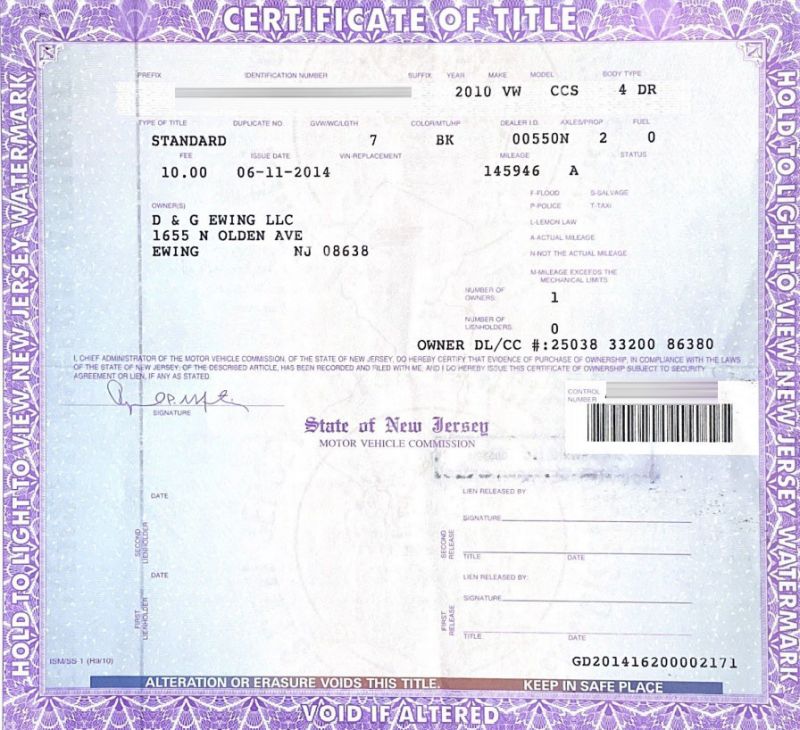
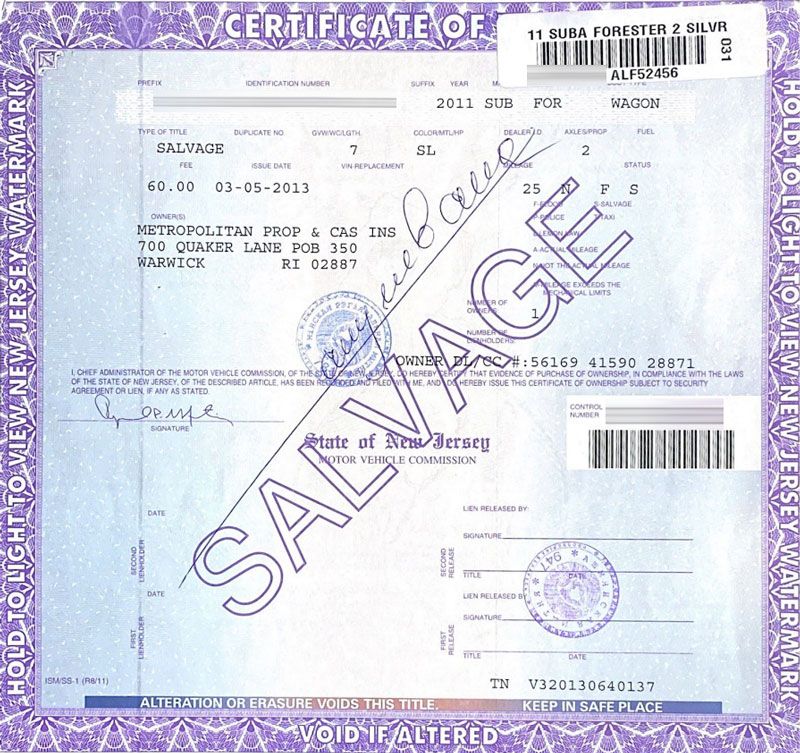
If the cost of repairing a car is 75% or more of its price, a Salvage Title is issued, and the car is considered a total loss. This is the most common type of title at American auctions. Such cars can only be used in the USA after complete restoration and obtaining a Rebuilt/Reconstructed certificate.
In Florida, there is a document called a Certificate of Destruction or Non-Repairables. These are written-off cars that cannot be restored and can only be used for disassembly for parts or export. These cars are slightly cheaper than those with a classic Salvage title, and their registration and customs clearance in most countries do not cause problems.
In Washington state, damaged cars are sold with a Bill of Sale document. These cars are intended for restoration. By the way, Washington is the only state where a car without a title can be repaired, registered, and exported without problems. Cars with Parts Only / No Title / Bill of Sale documents are intended solely for disassembly, and they cannot be transported out of the USA without obtaining a Junk title, which costs $300-500.
Importance of certificates when exporting cars

This is a kind of title equivalent. With a dealer's license or a disposal permit, you can request a Junk Certificate for car export. Such cars are not suitable for use on American roads and cannot be re-registered in the USA. There is also an MV-907 form (analogous to Salvage in other states) – this is a document from New York State. With it, you can easily export a car out of the state and register it in the USA after proper restoration, inspection, and obtaining a Rebuilt (Reconstructed) Title.
Lots marked Salvage/Flood (water damage)
These cars can have significant damage and represent a tricky category. They are usually thoroughly prepared for auction: washed and cleaned, but it is often difficult to determine the level of flooding from photos. I strongly advise against buying such "flood victims," although they are sometimes offered at very attractive prices.
The type of certificate significantly affects the car's value. It is logical that cars with a clean title (Clean Title) cost more, as they are bought for restoration and use by Americans themselves. Next are cars with a Salvage certificate – such cars, after restoration, can receive a Rebuilt or Reconstructed Title and be allowed to operate on US roads. This is the main type of car presented at auctions.

The most budget-friendly cars from America are those sold with a Bill of Sale or Junk Certificate. They are bought exclusively for subsequent disassembly for parts. The only ones who can raise the price on such lots are exporters and junkyards in the USA. However, access to such vehicles is limited: only registered brokers in the USA with the appropriate license type can purchase such cars.
| Type of Certificate | What the title means |
|---|---|
| Clean | With a clean history. If there is damage, it is non-critical |
| Salvage | Salvage. Repair cost is 75% or more |
| Non-Repairables | These are written-off cars that cannot be restored |
| Bill of Sale | Disassembly for parts (in all states except Washington). Export is not possible without obtaining a Junk certificate |
| Junk Title | Car for disposal, for parts. Export is possible |
| MV-907 | This is the so-called Salvage Certificate in New York |
| Rebuilt | Car restored, passed inspection, and can be legally registered in the USA |
Types of damages and their meanings
If a car is marked as a "flood victim" (note "flood"), should it be immediately rejected? It is important to carefully inspect the car and identify all its defects to assess the possibility and cost of repair. Usually, lots indicate types of damage, and a maximum of two main ones are indicated, even if the car is completely destroyed. For example, front damage, rear damage, roof damage, engine or transmission damage, burned engine, or hail damage.

According to US laws, cars that have been flooded must have a "flood" note in the accompanying documents. The risks here are as follows: the car may look intact, but if it was flooded up to the roof, it is essentially a heap of parts. If there are no visible damages and they are not indicated in Carfax, this should raise suspicion.
Sometimes you can see the note "donation," which indicates a donation. In this case, everything is honest: US residents donate cars to receive tax benefits. This is a feature of American law, but practice shows that good cars are rarely given away for free. Or, for example, the mark "damage history." This means that the car was already declared a total loss, had problems, and probably had a Salvage status.
If you see the note "theft" (theft or robbery), do not rush to draw conclusions about a criminal history. It's quite simple: the car was stolen, then found, the insurance company paid compensation to the owner, and he already managed to buy a new car. The insurance company puts the stolen vehicle up for auction.
If the VIN is removed from the car, it is likely that there will be difficulties with re-registration and registration. It is important to detect fraud, as sometimes unscrupulous Americans get rid of non-liquid cars this way. For example, if a car's engine breaks down, they may leave it in the forest and report it as stolen. The owner receives insurance payments, and the car becomes the property of the insurance company, after which it is auctioned. This is a type of insurance fraud that is common in the USA.
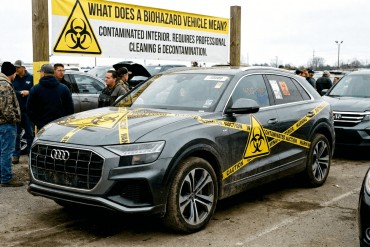
There are also notes "vandalism" and "biohazard chemical." In the first case, the car has superficial damage due to vandalism (painted body, cut seats, or broken windshield). In the second case, it is about toxic damage, such as mold from flooding or blood traces after an accident. Americans take these things seriously and do not hide them.
Usually, insurance companies indicate such details, and resellers may restore cars and re-list them at auction to sell them for more. In such cases, they may trick and mislead. Checking information from Carfax vehicle history databases can help find out who the seller is and get information about accidents and maintenance. For example, if the car has traveled 90 thousand miles, but still has the factory oil filter that has never been changed, this should also be taken into account.
| Types of damage | Explanations |
|---|---|
| Water/Flood/Waterflood | "Flood victims," water damage |
| Mechanical | Engine or transmission defect, turbine |
| Frame damage | Frame damage |
| Burn engine | Burned engine |
| Hail | Hail |
| Donation | Donation |
| Theft | Theft or robbery |
| Vandalism | Damage caused by vandalism |
| Partial repair | Partially restored |
| Top/Roof | Damaged roof |
American market and risks when buying a car
Do Americans never deceive? Buying a car remotely always carries some risk, even if you know the car was damaged. This is an axiom. The only thing that can protect you is a comprehensive check: studying all the lot photos and using data from vehicle history databases such as Carfax or Autocheck to get the most complete and honest information about the vehicle.
Often the most intact cars are sold by resellers. At first glance, such cars may look attractive, but they often hide serious technical defects. Sometimes external damage is visible in the photos. In the case of electric cars, batteries are often removed.
There are no markings like "no battery," and it is also difficult to determine this from the photos. In disputed situations, you have to rely on your intuition and Carfax data, where mileage, number of owners, and participation in accidents are checked.

Regarding mileage, the structure of the car market in the USA is such that rolling back mileage is pointless due to strict penalties for such manipulations, up to criminal liability.
Sometimes they indicate non-actual mileage, and in the Odometer Descriptions column, they write NOT ACTUAL – this means that this indicator is not factual. Thus, the seller removes all risks from himself.
Have auction prices really increased? There was news that Copart updated the auction fee structure, which led to the loss of the opportunity for a number of companies to buy cars under the previous conditions.
These changes mainly affected companies with small purchase volumes per year. The problem is that too many participants register at the auction, trying to save on broker services, and they often face problems such as expensive delivery or invalid documents, which leads to refusal to pay the issued invoices. To protect themselves from such costs and encourage people to buy cars through large organizations and brokers, the company made changes to the auction participation rules.